Maintenance matters
Bracing and maintenance: keeping the correction
Finishing the casts can feel like a major milestone — and it is. But the treatment journey is not finished. The foot-abduction brace helps maintain the correction while your child grows. This phase is longer than casting, and families often need practical support to make it work.
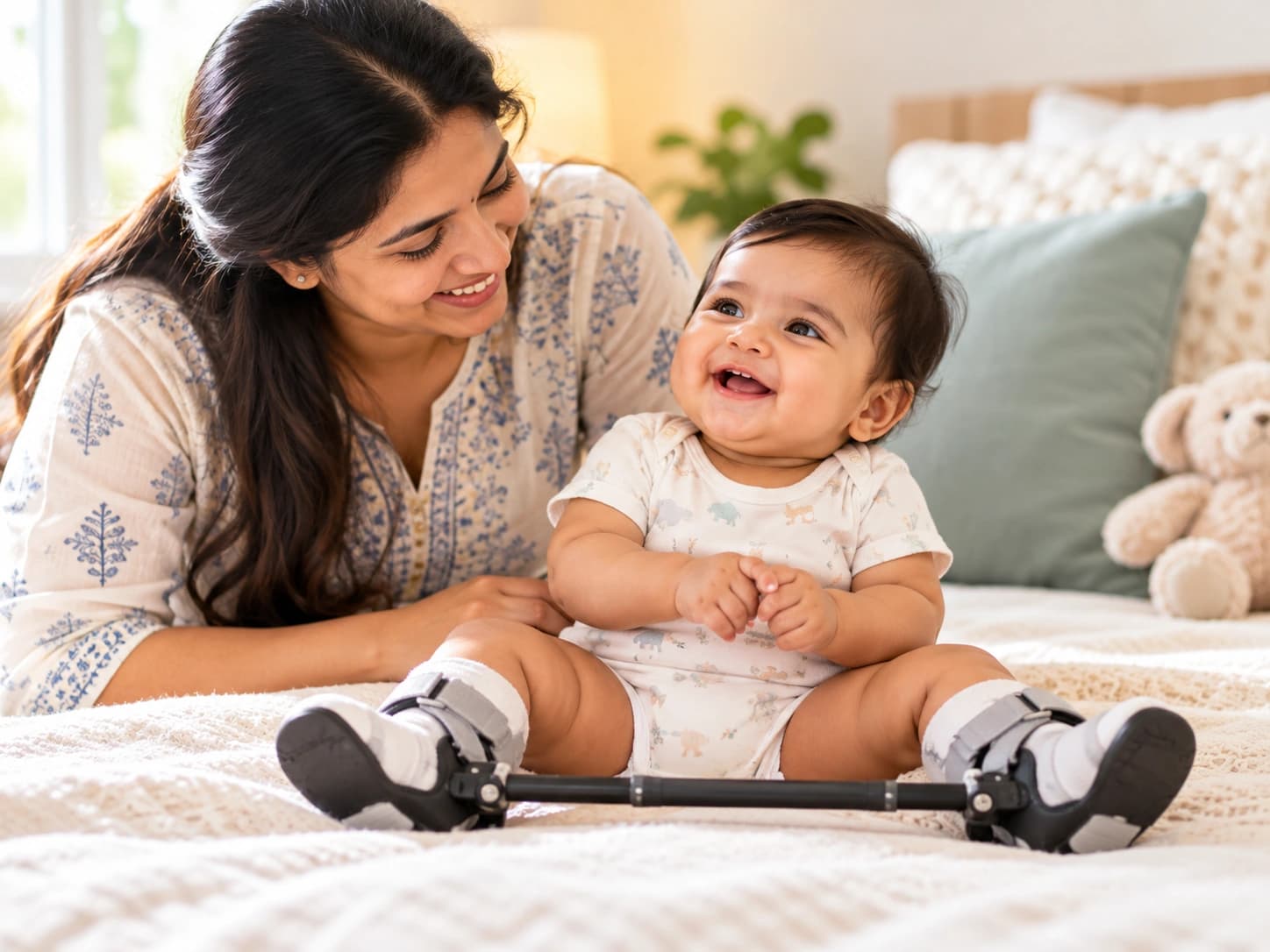
Why does my child need a brace if the foot already looks corrected?
Clubfoot has a tendency to recur. The foot-abduction brace is used after correction to help hold the feet in the position prescribed by the treating team. Research and clinical guidance consistently emphasize that correct brace use is an important part of reducing relapse risk.
What is a foot-abduction brace?
A typical foot-abduction brace uses two shoes or boots connected by a bar. The setup holds the feet apart and at angles chosen by the treating team. The exact device, settings and wear plan should be prescribed and checked for your child.
Foot-abduction brace (FAB) is a general name. Some parents and clinics also say Dennis Browne or DB splint. A typical Ponseti brace uses two boots or shoes connected by a bar, but designs and fitting details vary.
Your child’s brace schedule is individual
Happy Feet will not tell you to increase, reduce or stop brace hours. Exact wear schedules can differ with age, stage of treatment, recurrence risk and clinical protocol. Follow the plan given by your child’s treating team, and contact them before making changes.
Many Ponseti protocols begin with a period of full-time brace use and later transition to sleep-time use for several years. The exact hours, duration and brace settings vary by child and clinic. Follow the schedule prescribed by your treating team and do not change it without discussing it with them.
The first days can be an adjustment
A new brace changes how a baby moves and how the family handles sleep, feeding, clothing and settling. Some children adapt quickly; others need more time. If your child is persistently distressed, do not assume you simply have to 'push through'. Check for fit, skin, sizing or device concerns with the clinical team.
If your baby cries in the brace
- Start by checking the basics your clinician or orthotist showed you: is the heel seated as demonstrated, is the brace the correct size, and is anything rubbing the skin?
- Notice whether the distress is brief settling or persistent and unusual for your child.
- Use a calm, repeatable sleep and brace routine.
- Ask your treating team for help early rather than reducing prescribed wear time on your own.
Sleep and the brace
Many children use the brace during sleep as part of their prescribed plan. Keep your normal safe-sleep practices and avoid adding pillows, positioners or other items simply to accommodate the bar. If the brace seems to prevent comfortable positioning or your child is repeatedly waking in distress, ask the clinical team to review fit, size and the plan.
Heel slipping or the foot moving inside the boot
A heel that is not staying in the position demonstrated by the treating team may indicate an application, fit or sizing problem. Re-check the fitting instructions you were given and contact the clinic or orthotist if the heel continues to slip. Do not change bar angles or modify the brace yourself.
Redness, blisters or skin concerns
Skin should be checked regularly when a child is using a brace. Persistent redness, blistering, skin breakdown, swelling, unusual colour or temperature changes in the toes, or distress that makes you concerned should be discussed promptly with the treating team.
Check the skin regularly
- Look for persistent redness, pressure marks, blistering, broken skin or swelling.
- Notice whether the heel is sitting as your clinical team showed you.
- Contact the treating team about a wound, skin breakdown, persistent redness or fit concerns. Do not add padding or modify the brace without their advice.
Your clinical team may recommend thin, well-fitting socks under the brace to reduce friction and help keep the skin comfortable.
Growth changes the fit
Babies and young children grow quickly, so boots, straps and bar width may need review over time. Keep follow-up appointments and ask about sizing whenever the child has a growth spurt or the brace suddenly becomes harder to use.
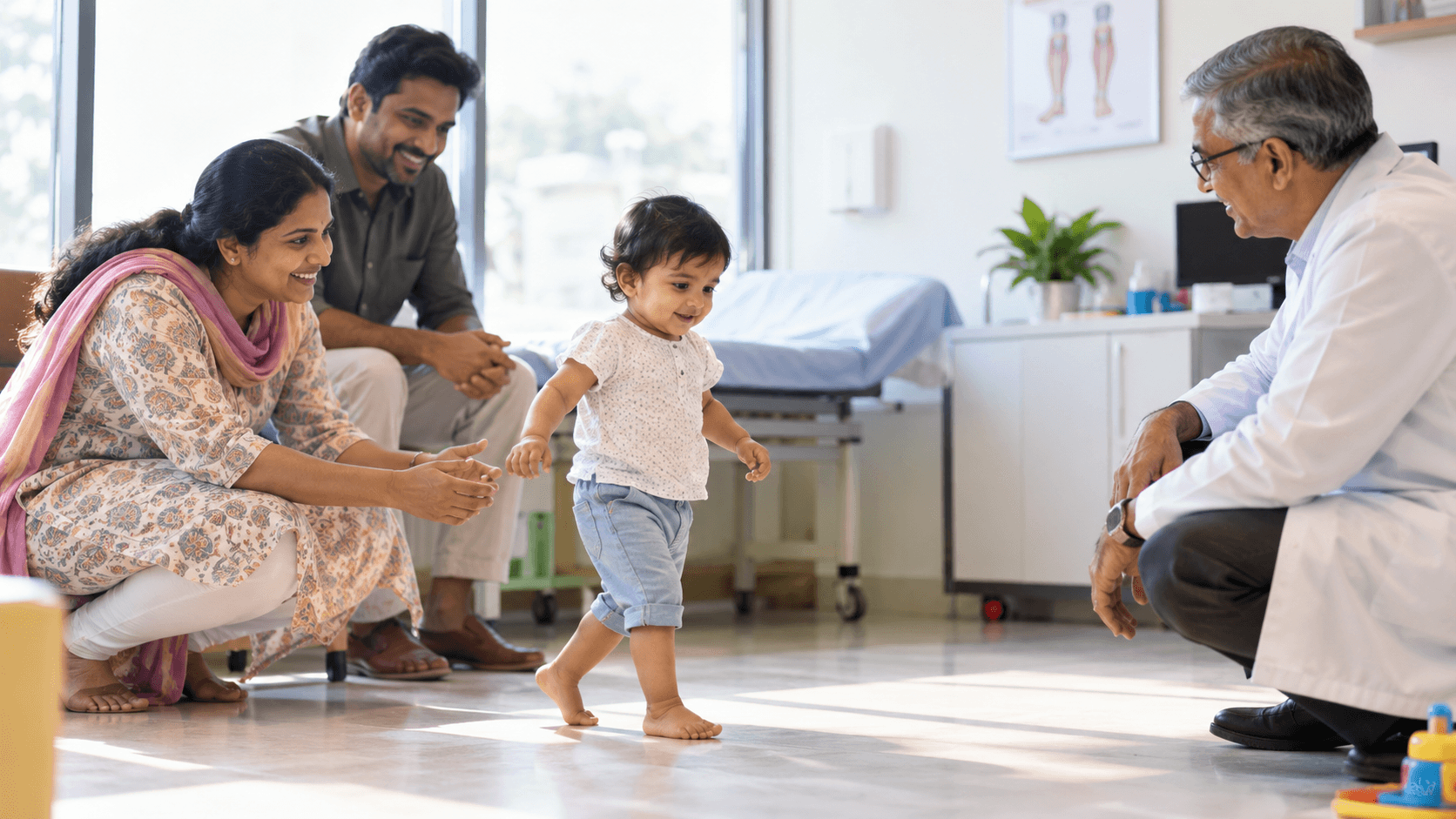
Daycare, grandparents and other caregivers
Anyone who regularly cares for your child should understand the prescribed brace plan and how the device is applied. A simple written handover — when it goes on, when it comes off, who to call and what concerns to look for — can reduce confusion.
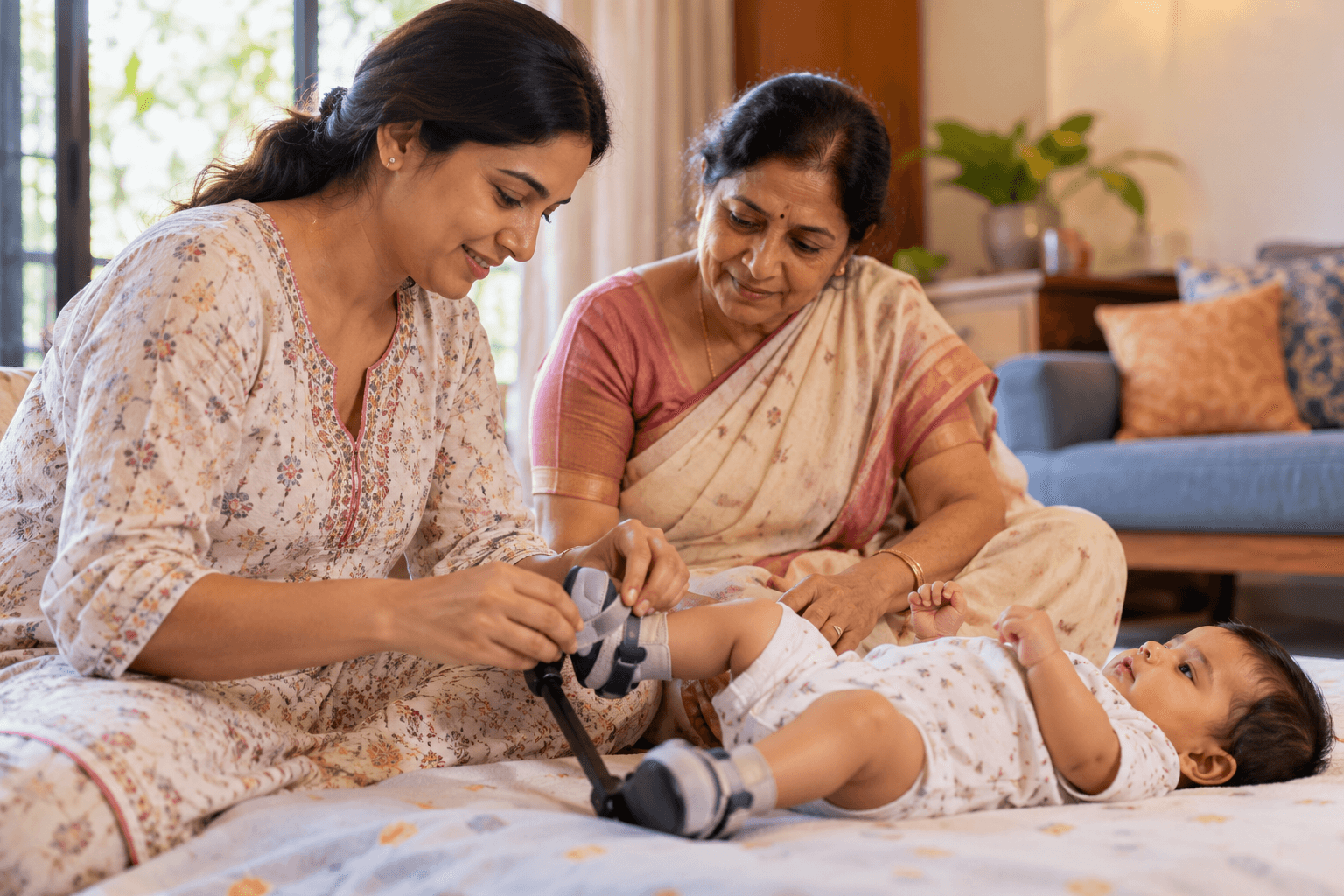
Travel and busy family life
Take the brace, socks and any fitting items recommended by your team, and keep the clinic contact details with you. If travel will interfere with appointments or the prescribed plan, discuss it with the team before you go.
If you are struggling, say so
Bracing can be demanding. Sleep disruption, work, travel, other children, cost, device access and family stress are real barriers. Asking for help is part of treatment, not a failure. Tell the clinical team what is making the plan difficult so they can help solve the actual problem.
For your next appointment
Questions to ask your clinician or orthotist
- What is my child’s exact wear schedule, and when will it change?
- Can you show me how the heel should sit in the boot?
- Which skin changes should make me contact you?
- How do I know when the boots or bar need resizing?
- Who do I contact if the brace becomes difficult to use between appointments?
- What should daycare or grandparents know?
- How often will you review the feet and brace?
When to contact your care team
Contact your team if you are worried about fit, ongoing heel slipping, skin injury, swelling or colour change, significant persistent distress, a damaged or outgrown brace, or if you are unable to follow the prescribed plan. Your clinician should define the exact escalation advice for your child.
Bracing and relapse
Even after a successful initial correction, clubfoot can recur as a child grows. Staying with the prescribed maintenance plan and follow-up gives the clinical team the best opportunity to maintain correction and respond early if concerns appear.
Understand relapse and follow-up →Follow-up while your child grows
Children outgrow braces. Ask your care team to review the boot or shoe size if the fit changes; replacement timing varies.
Clubfoot follow-up continues while a child grows. Visits are usually more frequent during early treatment and bracing and may become less frequent over time. Your treating team will recommend the schedule for your child.
Sources
External clinical references and supplied material used for this guidance.
- American Academy of Pediatrics — Diagnosis and Treatment of Idiopathic Congenital Clubfoot (2022)
- Pediatric Orthopaedic Society of North America — Clubfoot Study Guide
- Ponseti International Association / University of Iowa — Bracing Tips
- CURE International India Trust
Supplied reference material
- Cast care instructions for Parents (supplied local clinic handout, 2018). Brace-hour, fit and follow-up details are adapted as general questions, not a prescribed schedule.
Where you are now · Bracing & maintenance
Current viewBracing & maintenance
Maintenance continues as your child grows
Follow-up and relapse awareness are part of the longer journey. Use the bracing guide to find the relevant topic, or open the separate support guide for a concern.
Was this helpful?
Your choice is only shown here during this visit. Feedback is not sent or saved.
Suggest a correction
You can copy a note for later. Please leave out names and personal health details.