A parent-first guide to clubfoot
Clubfoot is treatable.You are not alone.
Happy Feet helps parents understand the journey from diagnosis through treatment, bracing and growing up — with clear information and practical support.

Start where you are
Where are you in the journey?
You do not need every answer today. Start with where you are now.
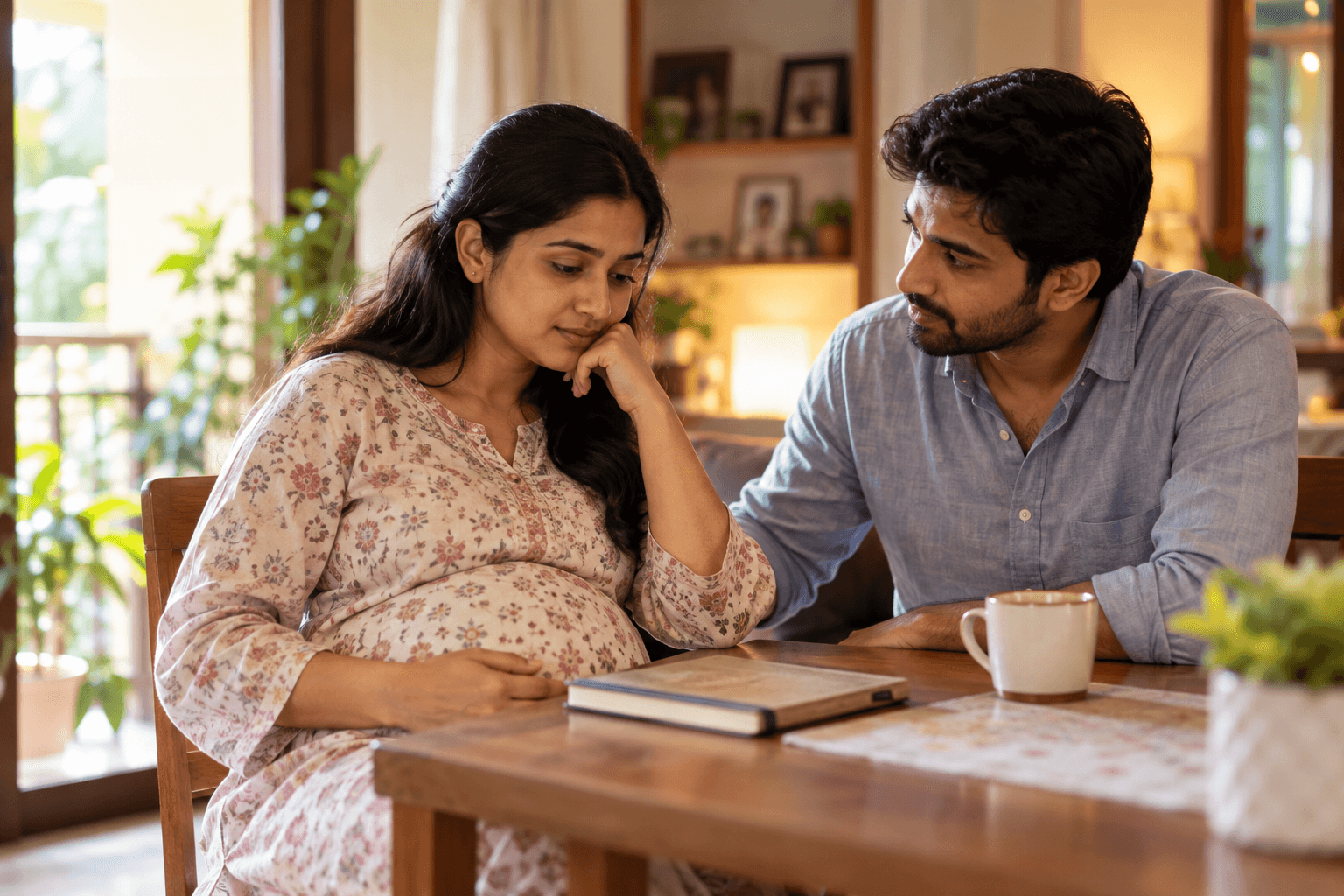 PregnancyClubfoot was seen on our scanUnderstand what the finding may mean and what happens after birth.
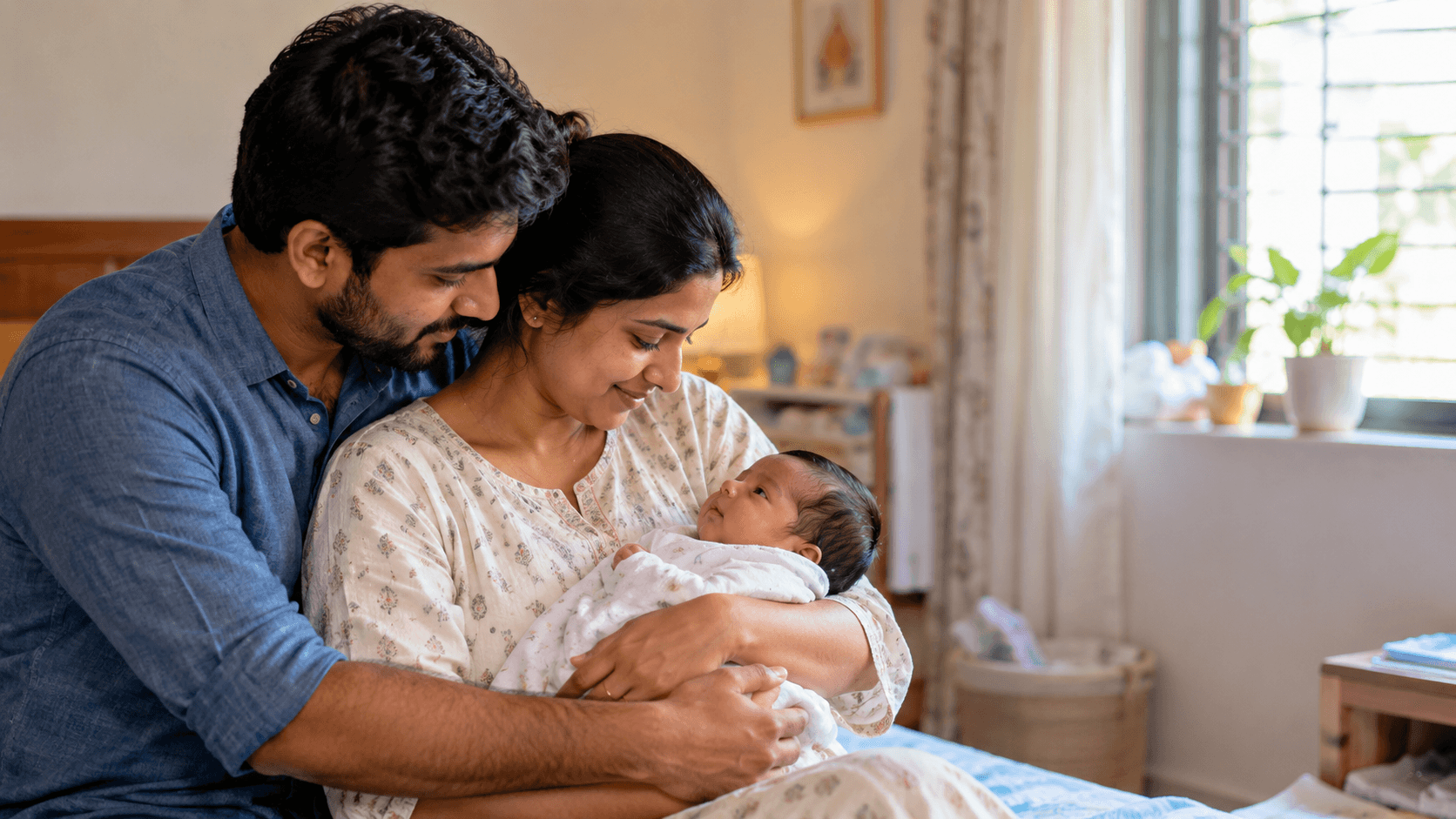 Newborn diagnosisMy baby was just diagnosedUnderstand the first appointments and treatment journey.
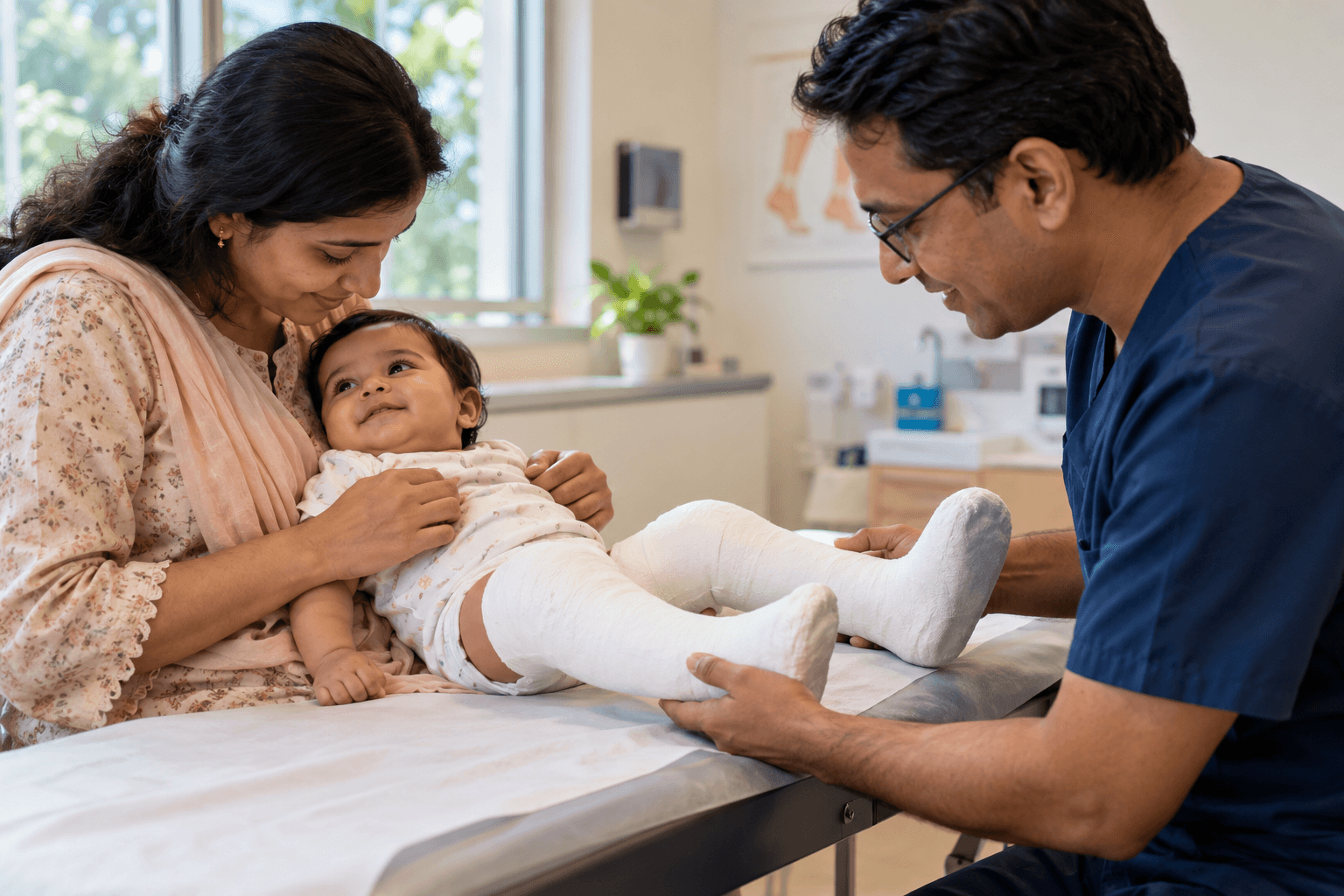 CastingWe are in castingKnow what to expect week by week.
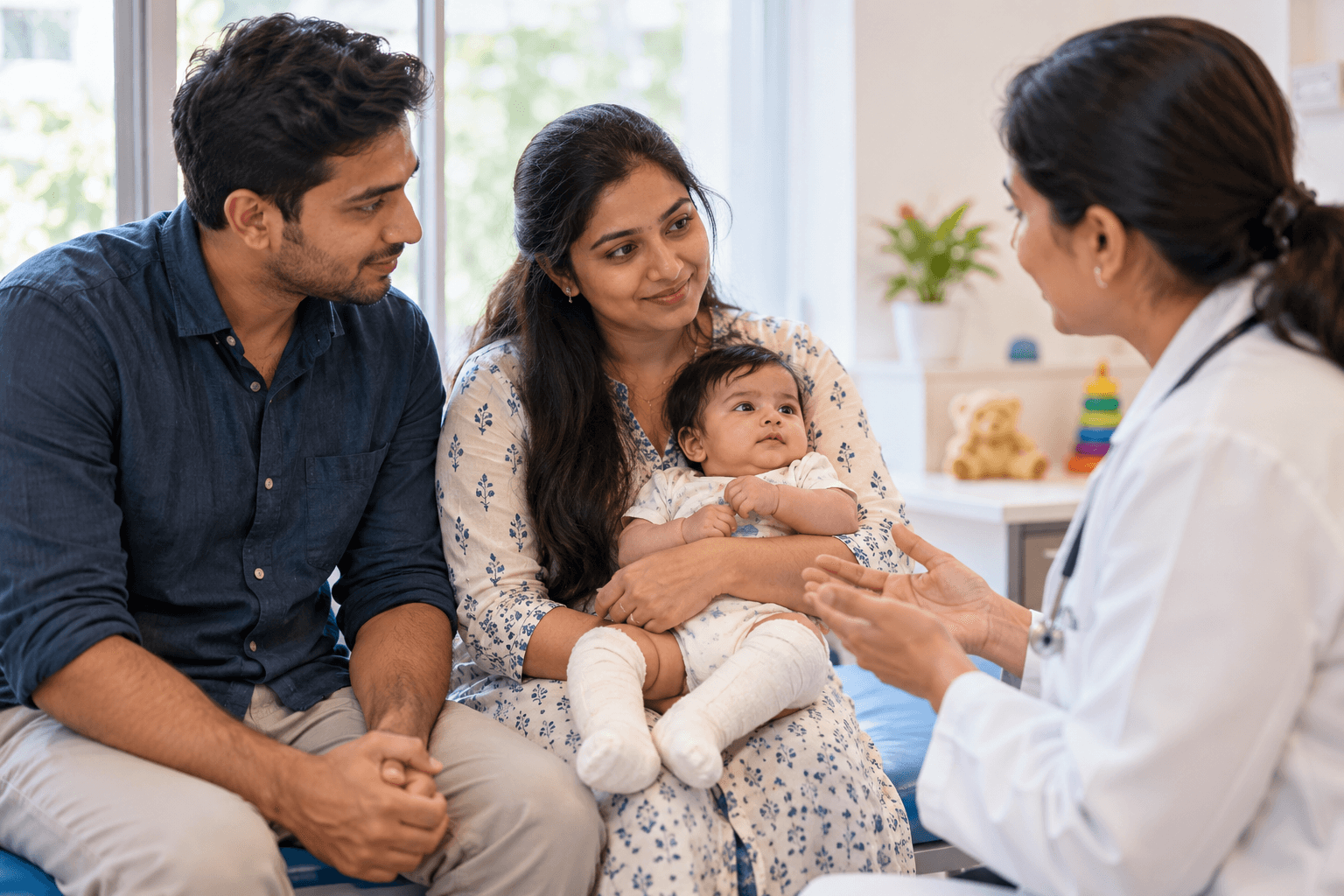 Tenotomy — if neededOur doctor discussed tenotomyUnderstand why it may be recommended and what usually follows.
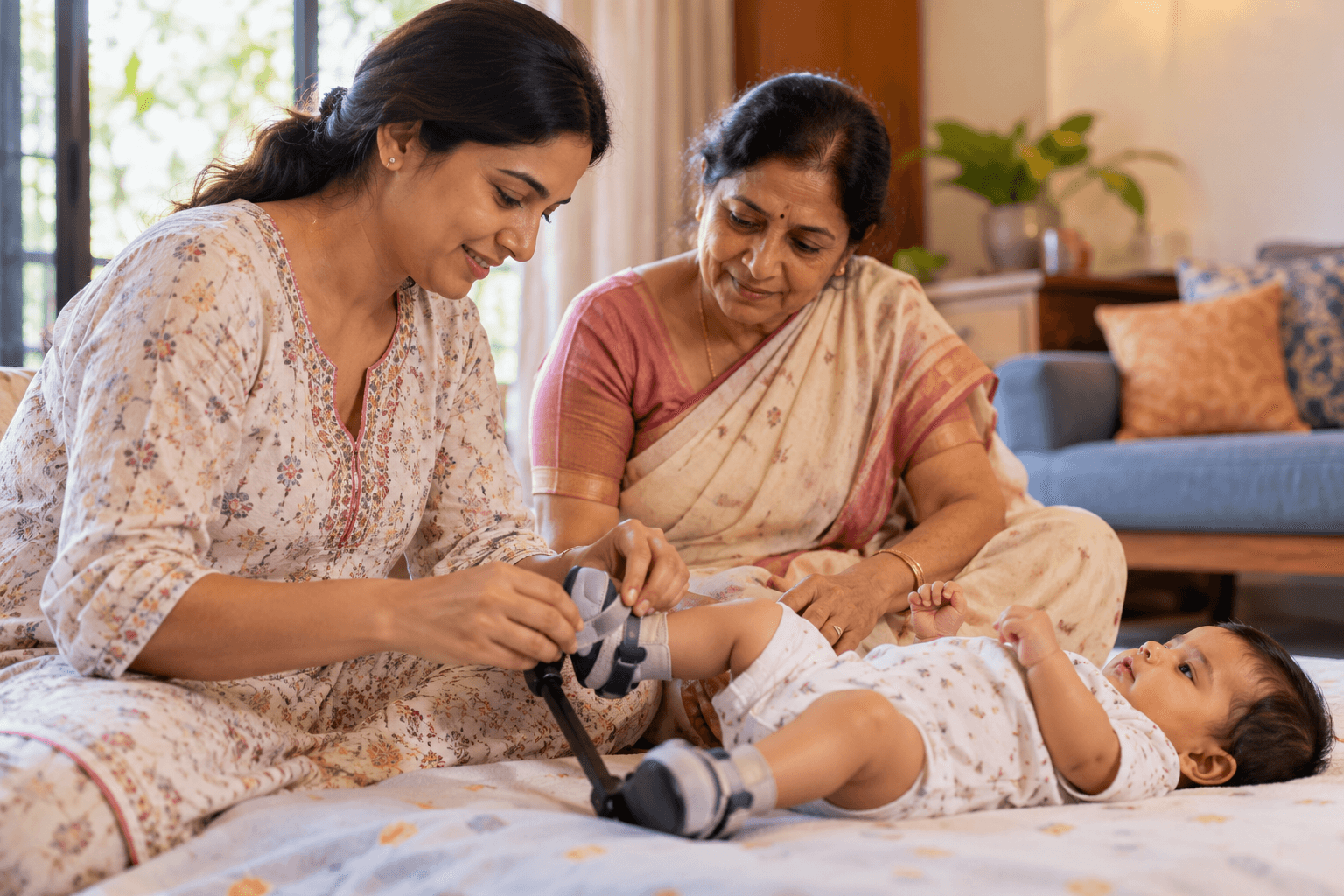 BracingWe are using the braceGet practical help with maintenance, sleep, fit and daily routines.
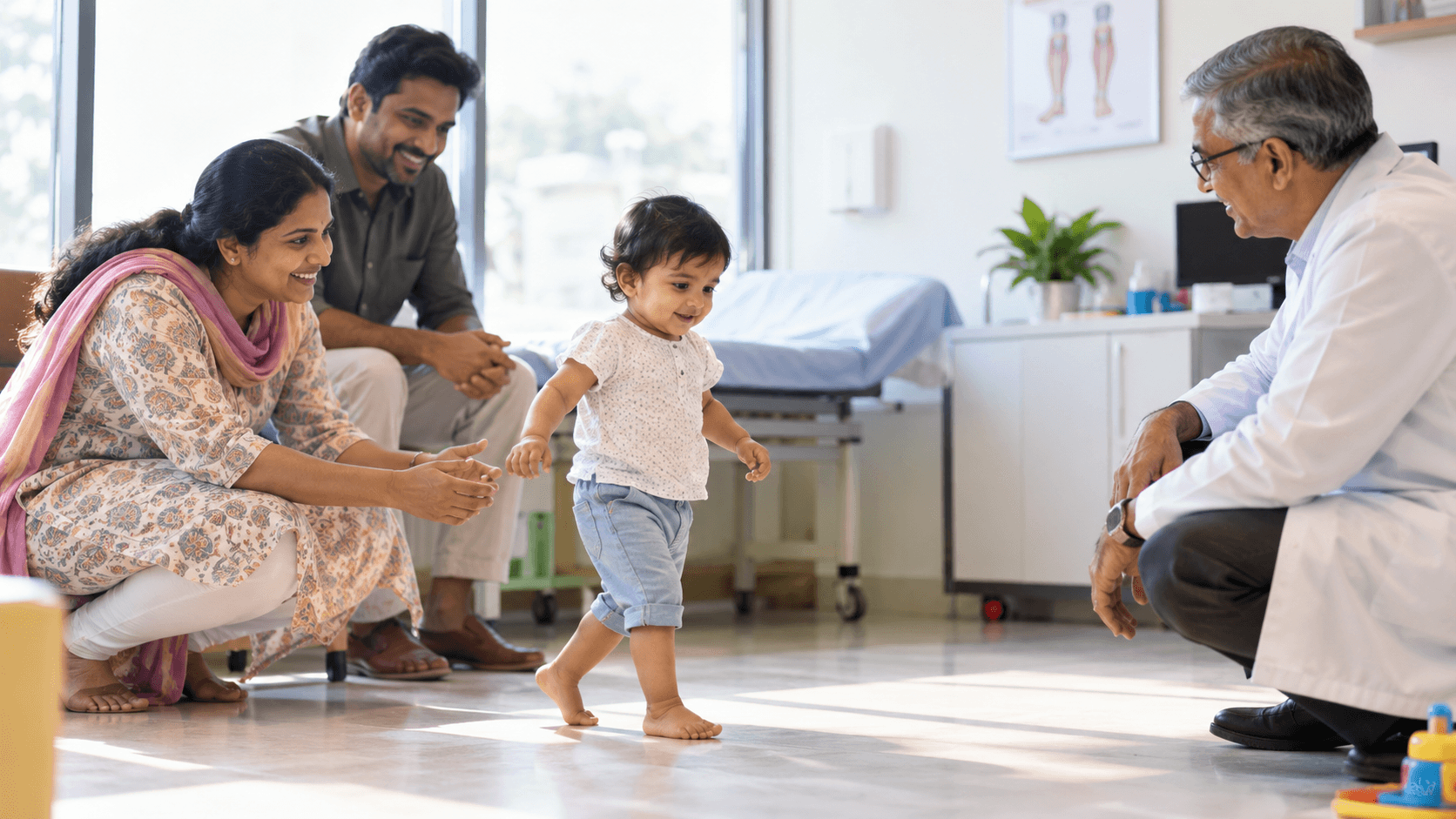 Follow-up / relapse concernI am worried the foot may be changing againUnderstand follow-up and when to speak with the clinical team.
The path ahead
The clubfoot journey, one stage at a time
Treatment happens in stages. Each stage has a different purpose.
- DiagnosisClubfoot is identified — during pregnancy or after birth.
- CorrectionSerial casting gently moves the foot into position over several weeks.
- MaintenanceA foot-abduction brace protects the correction while the child grows.
- Growing upFollow-up continues as the child grows. Most children go on to walk, run and play.
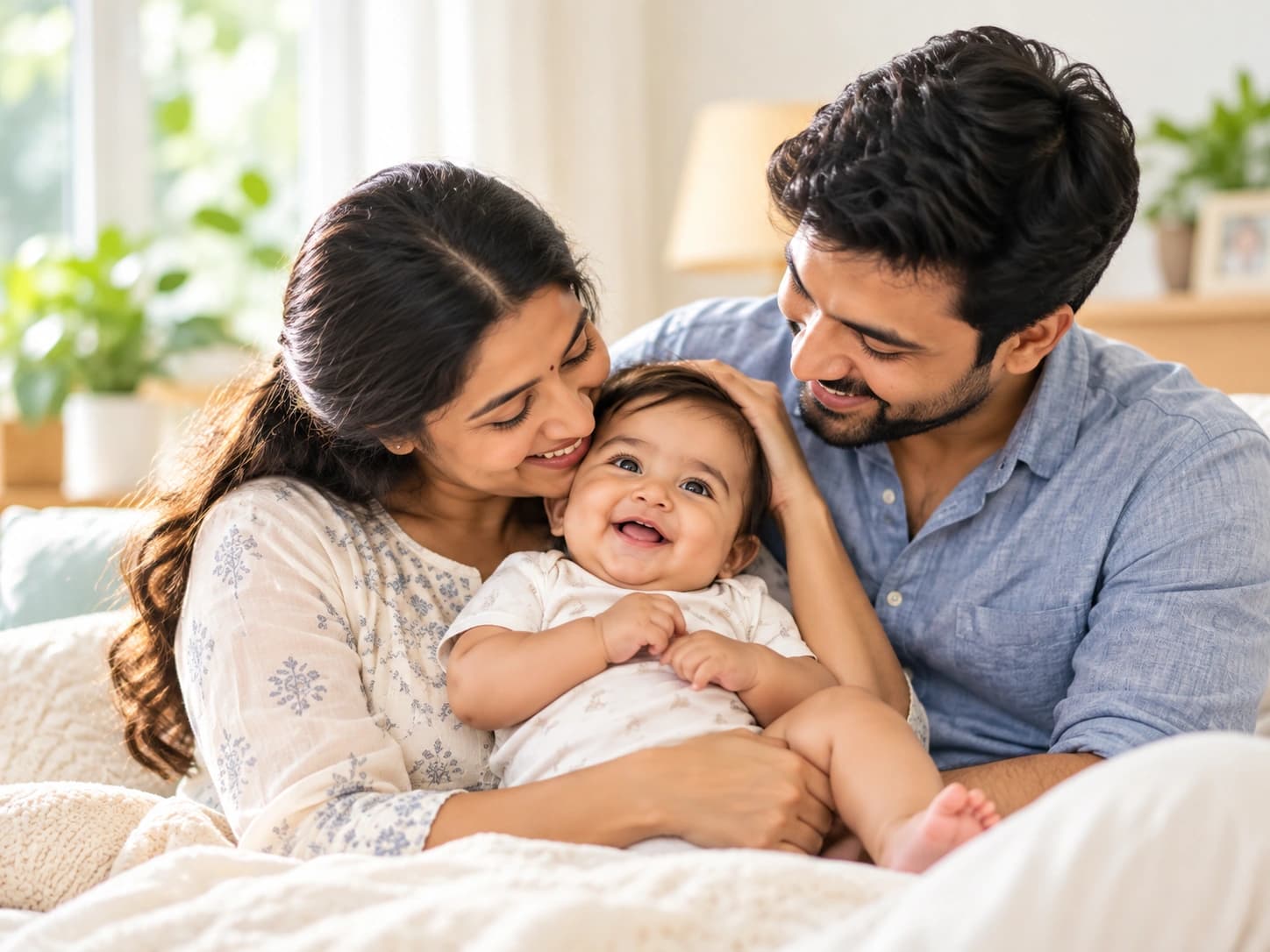
A little support for today
You can take this one step at a time
You do not need every answer today.
Start with the next step.
Questions are part of good care.
Write them down and ask your clinical team.
Difficult days happen.
Casting and bracing can be challenging. Asking for help is part of the journey.
Bracing & maintenance
Correction is a milestone. Maintenance protects the progress.
After casting, the brace becomes an important part of maintaining correction while your child grows. Building a routine can take time, and many families need practical support along the way.
Get bracing supportLooking ahead
The goal is an active childhood
Many children treated for clubfoot go on to walk, run and take part in everyday childhood activities. Treatment and outcomes can vary from child to child.

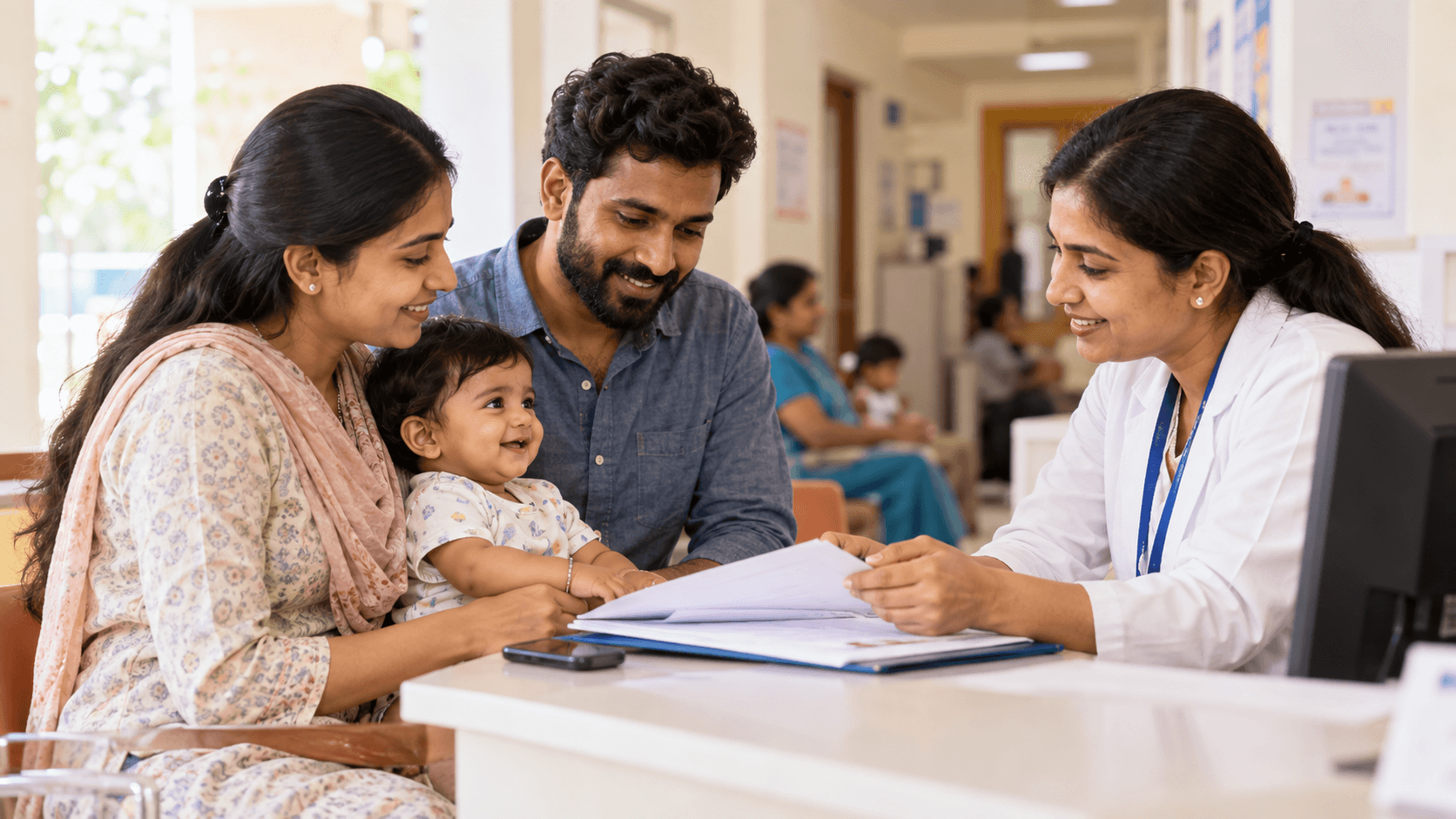
Support in India
Need help finding credible clubfoot care?
Learn what to look for in a Ponseti care team and what questions to ask.
Our content approach
Information you can understand — and verify
Evidence based
Built from credible medical and professional sources.
Sources provided
Parents can see where medical information comes from.
Parent-first explanations
Complex information is explained in practical language.
Corrections welcomed
Parents and clinicians can suggest improvements.
A family's reason for starting
Why Happy Feet exists
Happy Feet grew from a family’s experience of navigating diagnosis, treatment, maintenance and fragmented information — and wanting the next parent to have a clearer path.
Read our storyFrequently asked questions
Is clubfoot treatable?
Yes. Clubfoot is treatable, and the Ponseti method is widely accepted for idiopathic clubfoot. A child’s exact treatment and follow-up needs vary, so individual decisions belong with the treating clinical team.
What is the Ponseti method?
The Ponseti method is widely accepted as the standard treatment approach for idiopathic clubfoot. It is not a single procedure. It is a sequence: correction with serial casting, an Achilles tenotomy for many children when needed, and then bracing and follow-up to help maintain the correction.
Why is bracing needed after correction?
The brace is used to help maintain the correction and reduce the risk of relapse while the child grows.
Was this helpful?
Your choice is only shown during this visit. Feedback is not sent or saved.
Suggest a correction
You can copy a note for later. Please leave out names and personal health details.